Why a geopolitical conflict thousands of miles away is actively emptying your wallet
You know what? I am mad at the government.
Reason?
I am unable to even afford food because of the recent cylinder shortage and the prices. Is it gold? It is just a cylinder. Why am I being charged ₹2,000 for a cylinder I used to pay ₹900 for?”
This is what nearly every household and business is facing right now.
You must have come across multiple news articles about the LPG shortage caused by the war. But what exactly is happening, and why is it even affecting India, a country that has no part in any of this?
As of the 14th of March 2026, this is the 15th day of conflict between Iran, the US, and Israel. A war that erupted when Washington and Tel Aviv launched a massive military campaign against Tehran.
The catalyst was a collapsed nuclear standoff. Accusing Iran of building a conventional shield of ballistic missiles to protect a secret nuclear weapons program, the US and Israel executed a rapid decapitation strategy, obliterating military infrastructure and assassinating Iran’s Supreme Leader in the opening hours.
Iran, facing overwhelming Western air superiority, retaliated in the most economically destructive way possible.
They weaponized the global energy market.
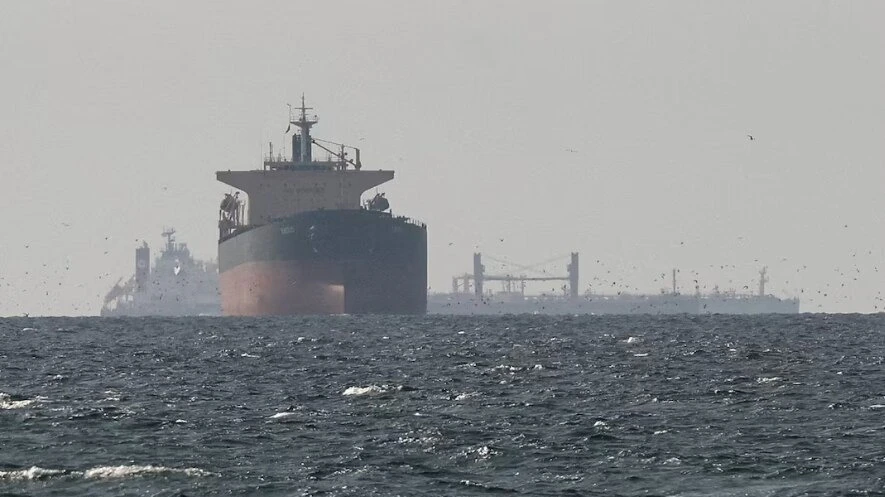
The Islamic Revolutionary Guard Corps moved to choke off the Strait of Hormuz. A narrow maritime chokepoint that handles roughly twenty percent of the world’s seaborne oil and gas trade. By targeting commercial vessels with drones and laying naval mines, they drove global war risk insurance premiums into the stratosphere.
Hundreds of global tankers were forced to drop anchor and wait.
That frozen chokepoint thousands of miles away is the exact reason your gas cylinder now costs ₹2,000 instead of ₹900.
The Math of Dependency
To understand why a geopolitical conflict thousands of miles away is actively emptying your wallet, you have to look at the underlying math.
India imports nearly 85 percent of its crude oil and relies overwhelmingly on seaborne LPG to feed a massive domestic market.
When a nation depends that heavily on ships crossing a single narrow stretch of water, one maritime disruption is all it takes to throw the entire domestic energy grid into chaos.
The moment news of the blockade hit the terminals, markets reacted instantly:
- Global tankers dropped anchor
- Maritime insurers pulled their coverage
- Traders began pricing in massive shortages before physical supply even ran dry
That psychological anticipation alone was enough to trigger a devastating panic across the Indian supply chain.
Dealers started hoarding. Distributors began rationing. Households rushed to secure cylinders before stocks vanished.
What followed was exactly what the laws of supply and demand predict.
On paper, the official price of a domestic LPG cylinder in Delhi still reads ₹913. But that number currently exists only on government dashboards. In reality, the shadow economy has taken over. Cylinders are quietly changing hands in the black market for ₹2,000 to ₹2,500. For the hospitality sector, the math is even more brutal. A commercial cylinder that normally costs ₹1,800 is now being sold out of the backs of trucks for anywhere between ₹4,000 and ₹6,000.
A Fracturing Local Economy
When fuel becomes that prohibitively expensive, the local economy begins to fracture.
Small restaurants simply cannot survive the margin compression. In Kerala, nearly 40 percent of eateries have already shut down operations entirely because commercial gas has vanished. In Pune, over a hundred establishments have either closed their doors or slashed their menus in half just to conserve whatever fuel remains.
The crisis has escalated to the point where essential municipal infrastructure is failing. Pune’s Vaikunth Dham, the largest crematorium in Maharashtra, was forced to suspend gas based cremations completely as LPG supplies dried up, pushing grieving families toward electric or traditional wood based pyres.
Naturally, economic theory suggests people will switch to alternatives.
But in real life, you cannot simply swap one input for another.
Restaurants in Bengaluru and Delhi have desperately reverted to cooking on firewood, a method abandoned decades ago. But wood requires constant monitoring, intense manual labour, and produces thick soot that modern urban commercial kitchens are simply not designed to ventilate. And as per recent reports, even the price of firewood is now climbing fast.
At the household level, the immediate alternative was electricity. Panic buying shifted online as people rushed to secure induction cooktops. Within hours, Blinkit, Zepto, and Swiggy Instamart were completely out of stock. And even if a household managed to secure the hardware, they quickly hit the induction trap. Most Indian cooking utensils are not flat bottomed or magnetic, making them entirely useless on an induction stove.
The seamless substitution that economists talk about on paper turned out to be a logistical nightmare in reality.
You simply cannot rewire millions of kitchens overnight.
The Diplomatic Twist
Now comes the twist.
While hundreds of global tankers sat paralyzed outside the Gulf, a highly specific diplomatic bypass quietly opened for New Delhi.
Following urgent backchannel talks between External Affairs Minister S. Jaishankar and Iran’s Foreign Minister, Tehran granted safe passage to a select fleet of Indian flagged tankers, notably the MT Pushpak and the MT Parimal, directly through the blockaded Strait of Hormuz. While Western linked vessels faced absolute restrictions and catastrophic war risk insurance premiums, Indian crude and LNG cargoes were systematically waved through.
This was not luck.
It was the weaponization of geopolitical neutrality.
By maintaining open dialogue with all actors and refusing to explicitly align with the US Israel military bloc, India converted its diplomatic posture into hard strategic leverage.
But a diplomatic bypass does not fix a mathematically broken global supply chain.
A few insulated tankers navigating the chokepoint cannot reverse the sheer volume of global supply abruptly removed from the maritime network. Hundreds of massive vessels are still anchored in international waters. Insurance markets remain paralyzed. Global energy traders are actively pricing in a total collapse of the route.
This means that even if India secures its physical quotas, the global market is fundamentally operating in a state of panic.
And when the global energy complex panics, an import dependent nation inevitably absorbs that shock right on its own streets.
The Macroeconomic Shockwave
So how does a ₹2,500 black market cylinder in Delhi actually materialize in national data?
The moment energy becomes prohibitively expensive in a heavily import dependent nation, the shock does not stay confined to the kitchen. It spreads through the entire economy.
The first place it appears is inflation. Historical RBI data indicates that every $10 increase in crude oil adds roughly 30 to 60 basis points to consumer inflation. With Brent crude already pushing toward $95 to $100, domestic inflation is drifting dangerously close to the central bank’s upper tolerance band.
At the same time, factories face their own operational crisis:
- Spot LNG prices jump
- Maritime shipping costs surge
- Manufacturers pay massive premiums for industrial heat, petrochemicals, plastics, and transport
- That pressure immediately feeds into the Wholesale Price Index, compressing margins across domestic industries
But the deeper structural damage occurs inside household budgets.
Nominal salaries do not suddenly adjust because a war breaks out in the Middle East. When a family that normally pays ₹900 for a cylinder is suddenly forced to pay ₹2,000, that extra ₹1,100 does not come from nowhere. It is pulled away from somewhere else. Fewer restaurant visits. Delayed purchases. Reduced savings.
Across millions of households, this silent squeeze erodes real purchasing power and acts as a deeply regressive tax on lower and middle income families.
When purchasing power weakens, economic growth quietly begins to fracture. Economists estimate that if crude stays near the $100 mark, India’s GDP growth could lose 20 to 40 basis points. A projected 7.2 percent growth rate could easily slide closer to 6.8 percent.
And then there is the external balance sheet.
Every barrel of oil and every shipment of LNG India buys must be paid for in dollars. Analysts estimate that sustained crude near current levels could increase India’s import payments by $7 to $8 billion every single month. If the disruption around Hormuz persists, the Current Account Deficit will widen sharply, forcing the RBI to burn foreign exchange reserves to defend the rupee.
It starts with a cylinder in your kitchen.
Then it bleeds into inflation.
And finally, it reaches the balance sheet of the entire country.
And the coming months will reveal whether India’s diplomatic neutrality and strategic reserves are enough to absorb the shock, or whether this is only the opening chapter of a far more painful macroeconomic reckoning.
Sources
- NDTV: 2 India-Flagged LPG Tankers Cross Hormuz After New Delhi-Tehran Talks
- India Today: Indian oil to get safe passage through Hormuz after Jaishankar’s call to Iran
- The Economic Times: LPG shortage forces around 40% of restaurants in Kerala to shut down
- Times of India: Commercial kitchens in Pune look for fuel options, many pause ops
- Deccan Herald: Gas-fired crematoriums in Pune to shut temporarily amid West Asia conflict
- Hindustan Times: Delhi LPG crunch fuels black market, prices soar to ₹2.5K per cylinder
- The Hindu: LPG and oil crisis LIVE: Commercial LPG sales start in all States and UTs
- The Hindu: Firewood to the rescue as LPG goes scarce
- The Hindu: Indian restaurants cut rava dosas, parottas and pizza as LPG shortage spreads
- NDTV Profit: LPG Scare: Induction Stoves Sold Out On Blinkit, Swiggy
- The Economic Times: India may face $7–8 billion higher monthly import bill as crude surges
- The Economic Times: West Asia conflict poses downside risk, India GDP growth seen at 7.1% in FY27
Subscribe to Economic Frictions
Get independent analysis delivered to your inbox.
Instant unsubscribe link included in every email.
Secure Subscription • One-Click Unsubscribe